Before you read on: this article is general education, not financial advice. It does not consider your objectives, finances or experience. Do your own research, check any broker on the register of its regulator, and speak to an independent adviser if you are unsure.
Last updated 29 October 2026.
Naked forex trading: what it means
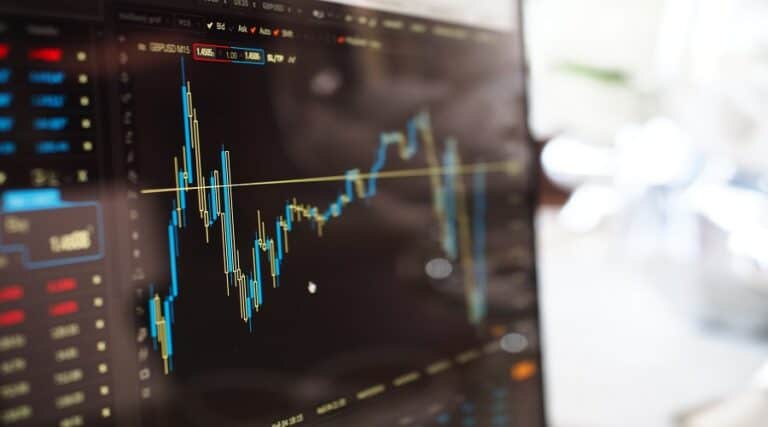
Naked forex trading, sometimes called price action trading, means reading the price chart directly. Traders use candlestick patterns, support and resistance levels, and trend direction, and they do not add indicators such as moving averages or RSI. Supporters say the chart already contains the information that indicators try to summarise.
How a naked trade is planned
A typical plan has four parts. First, identify the trend on a higher timeframe, for example the daily chart. Second, mark a clear level where price has reacted before. Third, wait for a candlestick signal at that level, such as a bullish engulfing candle near support. Fourth, set the stop-loss just beyond the level and the target at the next level of resistance.
Worked example: EUR/USD is in an uptrend on the daily chart and pulls back to 1.0800, a level it bounced from twice before. A bullish engulfing candle forms there. A trader buys at 1.0810, places a stop-loss at 1.0770 (40 pips below entry), and targets 1.0930 (120 pips above entry). The reward-to-risk ratio is 3 to 1. With a $1,000 account risking 1% ($10), a standard lot would risk far more than that, so the position would need to be much smaller. That sizing step is the part most beginners skip.
Benefits of the naked approach
It is simple to learn because there are only a few concepts. It keeps the chart uncluttered, so a trader can see the price action clearly. And it forces a trader to define a level and a stop before entering, which encourages discipline.
Risks of the naked approach
The main risk is subjectivity. Two traders can look at the same chart and mark different levels or see different patterns, so results depend heavily on the trader. Candlestick patterns also fail often, especially in choppy markets. Stops placed at obvious levels can be hit by short spikes, and beginners often move stops further away to avoid a loss, which turns a small loss into a large one.
What to practise first
Practise on a demo account until your level-marking and entries are consistent for at least 50 trades. Keep a written journal of each setup, including why you entered and why you exited. Review the journal weekly and look for repeated mistakes.
Frequently asked questions
Is naked trading profitable? It can be, but no method guarantees profit. Results depend on risk management, position sizing and discipline.
Do I need indicators at all? No, but many traders use one or two as confirmation. The important thing is to choose a method and test it.
Next steps
Read our guides on pips and lot sizes, leverage, and stop-loss orders before you try any method with real money.
Sources and further reading
We checked the regulatory claims in this article against the following primary sources. Rules change, so check the current version before you rely on any figure.
ESMA press release, 27 March 2018 (leverage caps, 50% close-out and negative balance protection for EU retail CFD clients, and the 74-89% loss statistic).
FCA statement on the ESMA measures (the UK position).
FCA policy statement PS19/18 (permanent UK restrictions on retail CFDs).
Pip and lot definitions are market conventions rather than regulatory rules. Check the contract specification for each instrument with your broker.
Risk warning: trading forex and CFDs involves a high risk of loss, and most retail accounts lose money. This article is general education, not financial advice. Read our disclaimer.
Step by step: placing a naked trade with a plan
Use this checklist before every trade. Write it down, because the habit matters more than any single rule.
1. Define the trend. Look at the daily chart and decide whether the market is making higher highs and higher lows (uptrend), lower highs and lower lows (downtrend), or moving sideways. Only look for buys in an uptrend and sells in a downtrend, unless you are deliberately trading a range.
2. Mark the level. Find a price where the market has reacted at least twice before. A level that held twice is more meaningful than one that held once.
3. Wait for confirmation. Do not buy just because price touches the level. Wait for a candle that closes away from the level in the trend direction, such as a bullish engulfing or pin bar candle.
4. Set the stop first. Place the stop-loss just beyond the level, not at a round number where many stops cluster. Then calculate the position size so that a stop hit costs no more than your planned risk.
5. Set the target. Use the next level of resistance or support. Only take the trade if the target is at least twice as far as the stop, so a losing trade does not wipe out several winners.
6. Record it. Note the pair, the level, the signal, the entry, the stop and the target. Record the outcome and whether you followed the plan.
Common mistakes with naked trading
Moving the stop. Widening a stop after entry turns a planned small loss into an unplanned large one. If the setup is wrong, accept the stop.
Trading every pattern. A candle that looks like a signal is not a signal unless it appears at a level and in the trend direction. Most candles on a chart mean nothing.
Ignoring the news calendar. Price action can break down around major releases such as interest-rate decisions. Many traders avoid entering trades just before them.
Overtrading. Simple methods still produce many signals. Set a daily limit on the number of trades and stop when you reach it.
Testing the method
Before risking real money, test the method on past charts (backtesting) and then on a demo account. Record at least 50 trades. Measure the win rate, the average win and the average loss, and the largest losing streak. A method with a 40% win rate can still be profitable if the average win is three times the average loss, but only if the rules are followed exactly. If your results are poor, change one rule at a time and test again rather than abandoning everything.
Who this method suits
Naked trading suits traders who prefer a clean chart and enjoy reading price directly. It suits traders with patience, because good setups are infrequent. It does not suit anyone who wants constant action, who cannot accept losses, or who will not commit to a written plan.
Journal template for naked trades
A useful journal has one row per trade and these columns: date, pair, timeframe, trend direction, level and how many times it held, signal candle, entry price, stop, target, position size, risk in account currency, result in pips and money, whether the plan was followed, and one sentence on what you would change.
After 30 trades, sort the journal by setup type. You may find that one setup, such as pin bars at daily support in an uptrend, produces most of your profit, while another produces most of your losses. That is far more useful information than your overall win rate, and it tells you exactly which rules to keep and which to drop.
When naked trading is not enough
Price action alone can miss context. Major news, central-bank policy changes and changes in risk appetite can override a clean chart. If you notice that your setups keep failing around particular events, add a rule to avoid trading near those events rather than adding more indicators.